Újbuda is full of offices, university buildings and people working from home. If you sit eight hours a day, your neck and back often complain by the evening. This article is about what you can do for yourself, and where the point is at which it makes sense to ask for help.
There is no single “correct” posture
In the MozgásKlinika approach, posture is not a frozen pose but a function that is regulated all the time. The trouble is rarely that you sit “badly”. Much more often it is that you sit the same way for hours. A good posture is therefore always the next one: the one you will soon change.
Four habits that cost nothing
- Change position. Stand up every half hour, or at least sit differently.
- Bring the screen to your eyes. If the top of the monitor is near eye level, your head does not drift forward.
- Take phone calls standing or walking. This is the easiest movement to win back in your day.
- Move your shoulders and neck. A few slow shoulder circles and head turns are enough to break up the monotonous load.
When is this not enough?
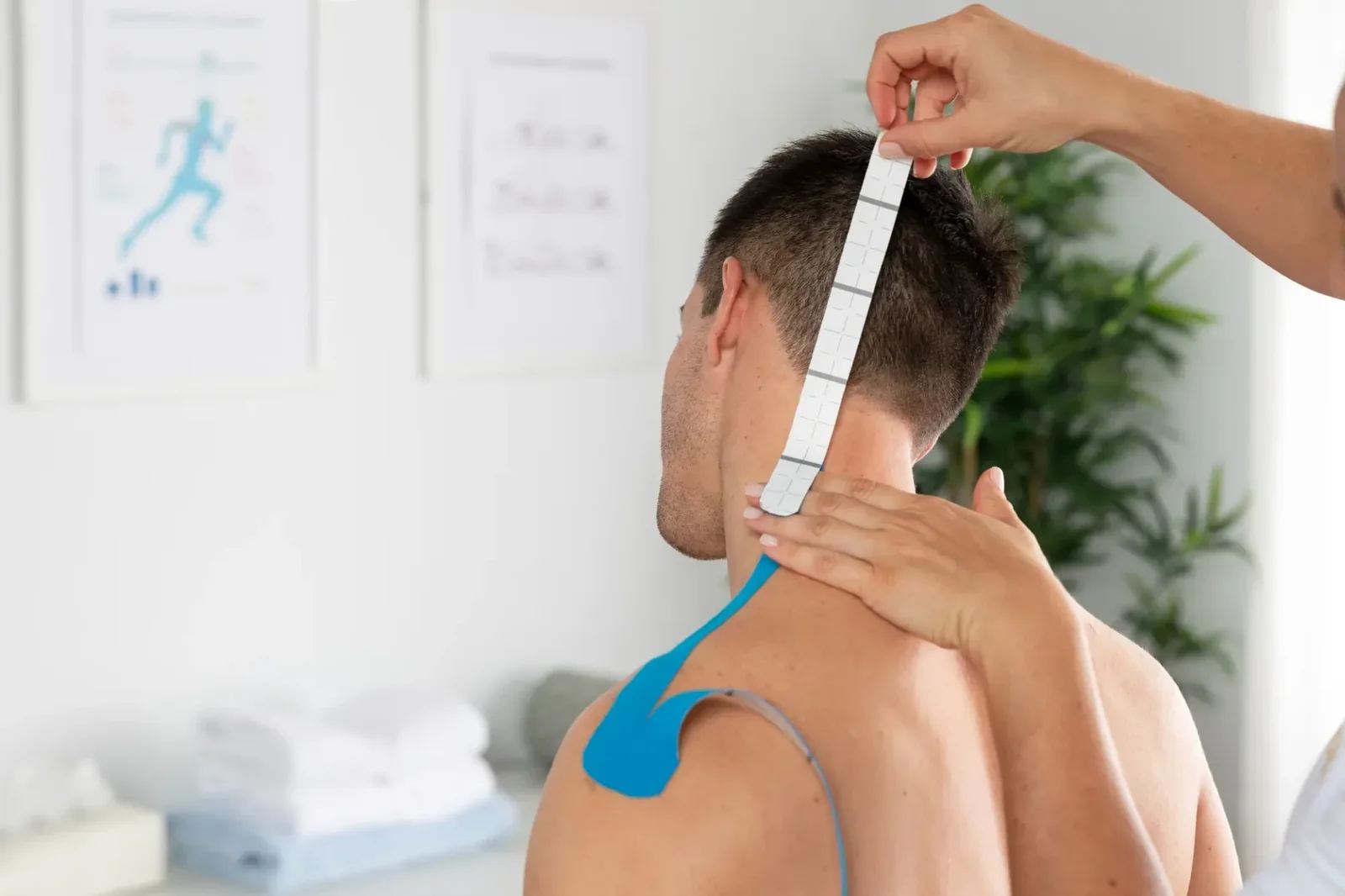
It is worth coming for a first assessment if the neck or back pain has kept returning for weeks, if it travels into your arm, if it comes with numbness, or if your headache starts from your neck. According to the clinic’s website, the examination also looks for signs of postural deviations.
What can the clinic add?
Improving posture is among the fields of all six members of the team. Care typically has two parts:
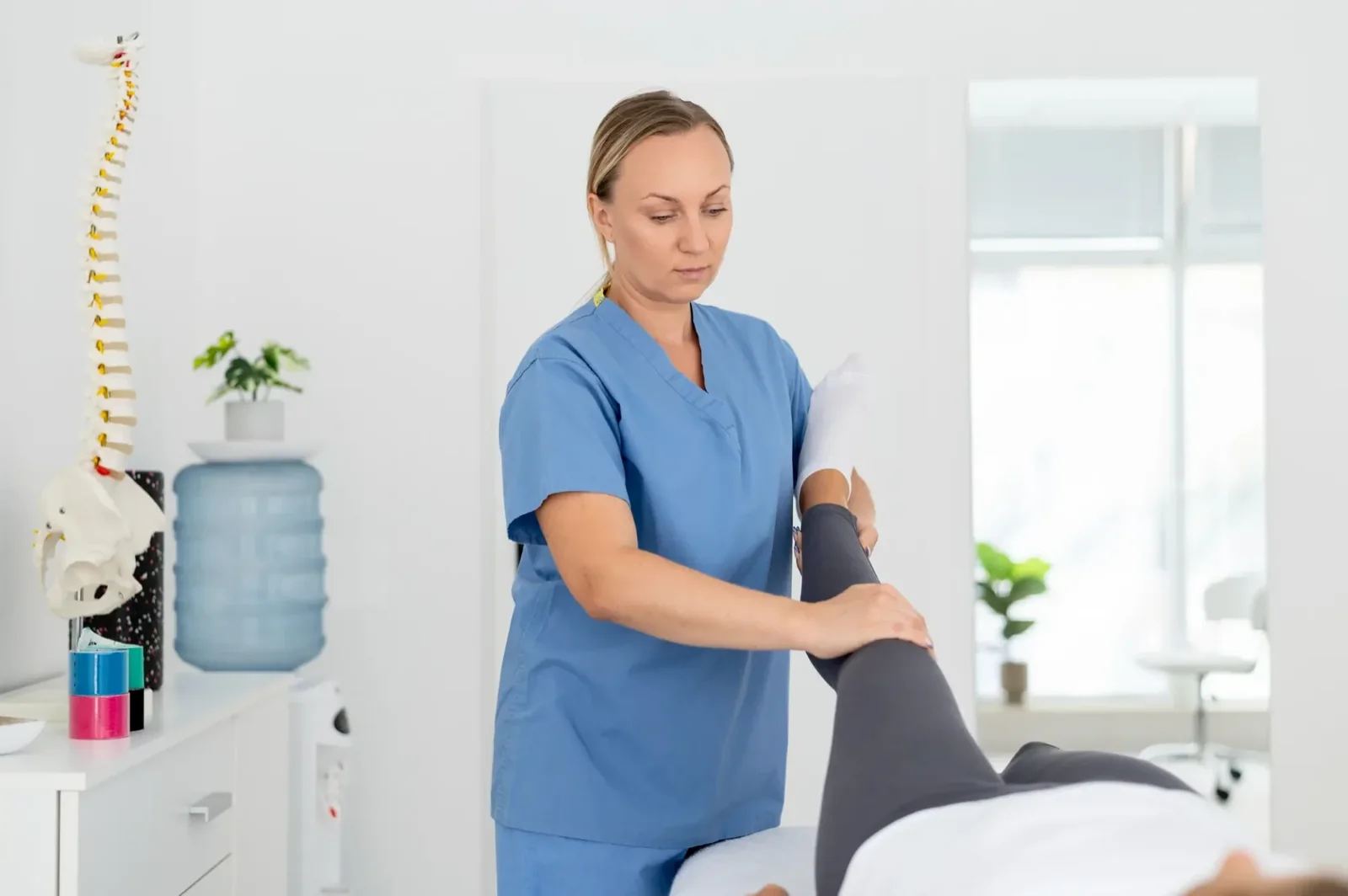
- manual therapy for the tight, painful areas;
- posture-correcting physiotherapy exercise, which teaches your muscles to hold under load as well.
How the two relate is the subject of the article Physiotherapy and manual therapy.
The neck and the jaw
If you clench your teeth while you work, neck tension and jaw joint complaints may appear together. If your jaw clicks or hurts, read the article on the clicking jaw.
In the long run
At the end of treatment the goal is not that you never sit again, but that your body can cope with it. That takes regular movement: you will find ideas in the article on spine training after treatment.